
The Jute Industry at a Crossroads: Can the 2026 Bumper Harvest Spark a Revival?

The Price Crunch: MSP vs. Soaring Market Realities
In February 2026, the Union Cabinet approved a Minimum Support Price (MSP) of ₹5,925 per quintal for raw jute for the 2026-27 season—an increase of ₹275 over the previous year. While this provides crucial income security for farmers, the MSP has become largely symbolic amid tight supply conditions.
Raw jute market prices have surged dramatically, often trading in the ₹14,000 to ₹17,500+ per quintal range (with peaks approaching ₹19,000 in some periods). This extreme volatility has severely impacted mill viability. With raw material costs decoupling from the pricing of finished goods like sacking and hessian, many mills have suspended operations, leading to widespread layoffs and idle capacity across the sector.
Hope on the Horizon: The August Bumper Harvest
The industry’s immediate lifeline rests with the upcoming harvest, projected to be a strong crop of approximately 95–100 lakh bales. This anticipated increase in supply—following lower output in recent seasons—could prove transformative for two key reasons:
1. Price Stabilization: Greater availability is expected to moderate spot prices to more sustainable levels, potentially in the ₹11,000–13,000 range for future contracts. This would ease pressure on mill balance sheets and improve margins.
2. Mill Reopenings: The West Bengal government has launched an intensive drive to reopen all 18 closed mills in the Barrackpore industrial belt. Several units in areas have already resumed or are preparing to restart operations, with expectations that most will be back online by mid-July. This could restore livelihoods for thousands of workers in the region.
Regaining Lost Clients: Reliability and Diversification
Prolonged supply disruptions have driven many buyers—both domestic and international—toward synthetic alternatives like polypropylene. To win them back, the industry must evolve from a low-cost, volume-driven player to a high-reliability, value-added partner.
- Building Supply Chain Reliability: Government and industry bodies should collaborate on a “buffered supply chain” mechanism—such as strategic stocks managed through the Jute Corporation of India (JCI)—to guarantee raw material availability to mills even during lean periods. Consistent production schedules are essential to rebuild buyer confidence for both export and domestic markets.
- Aggressive Product Diversification: The future lies in Jute Diversified Products (JDPs), including technical textiles, geo-textiles, eco-friendly automotive components, shopping bags, floor coverings, and lifestyle packaging. These higher-margin products are less vulnerable to raw material price swings than traditional B-twill bags and align with global demand for sustainable, biodegradable alternatives to plastics.
Government and Industry Synergy: Policy and Modernization
Effective collaboration will be decisive:
- Balanced Regulation: While stock control orders help prevent hoarding, they must be calibrated carefully to allow mills sufficient inventories to weather seasonal fluctuations without artificial shortages.
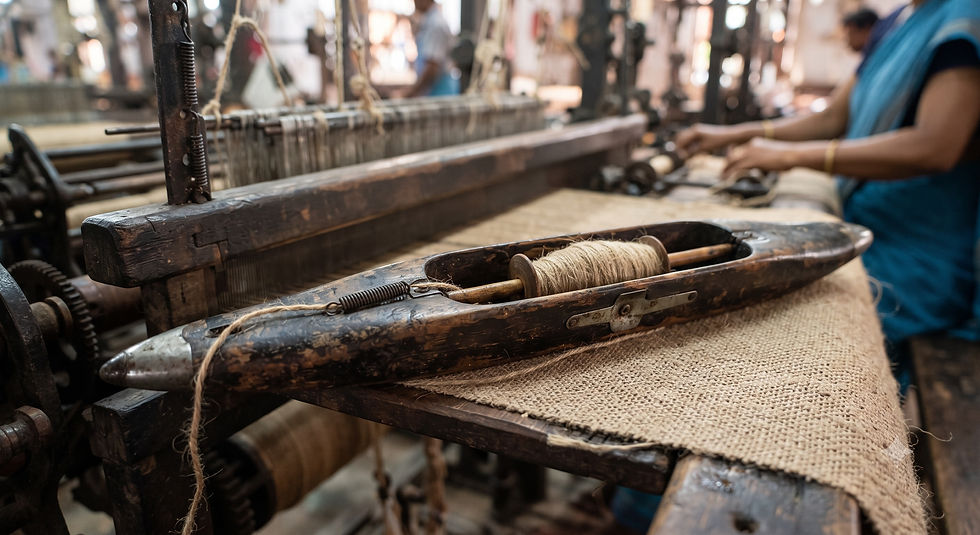
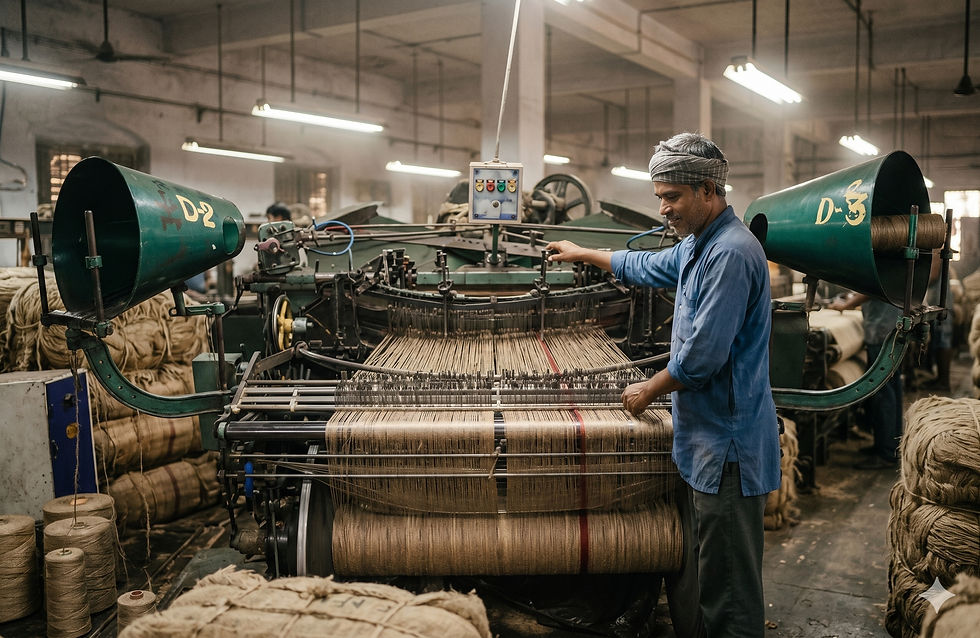
- Modernization Drive: Utilizing the available 30% subsidy for machinery upgrades is critical. Shifting from outdated, labor-intensive processes to high-speed, automated lines will improve productivity, quality, and cost-competitiveness against synthetic rivals. This, combined with skill development and research into new applications, can strengthen the sector’s long-term resilience.
The current crisis reflects structural bottlenecks—price volatility, aging infrastructure, and over-reliance on traditional products. However, the scale of the impending harvest offers the best opportunity in years to reset the industry’s cost structure and competitiveness.
By prioritizing supply chain consistency, embracing modernization, and accelerating diversification into high-value JDPs, the Indian jute industry can break its volatile cycle. For the Golden Fiber and the millions whose livelihoods depend on it, 2026 has the potential to mark not just recovery, but a sustainable renaissance as a global leader in eco-friendly fibres.

Comments